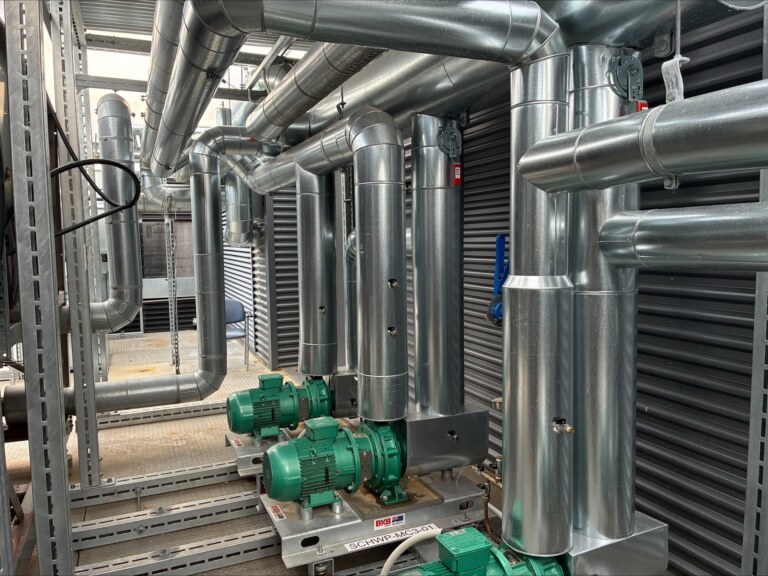
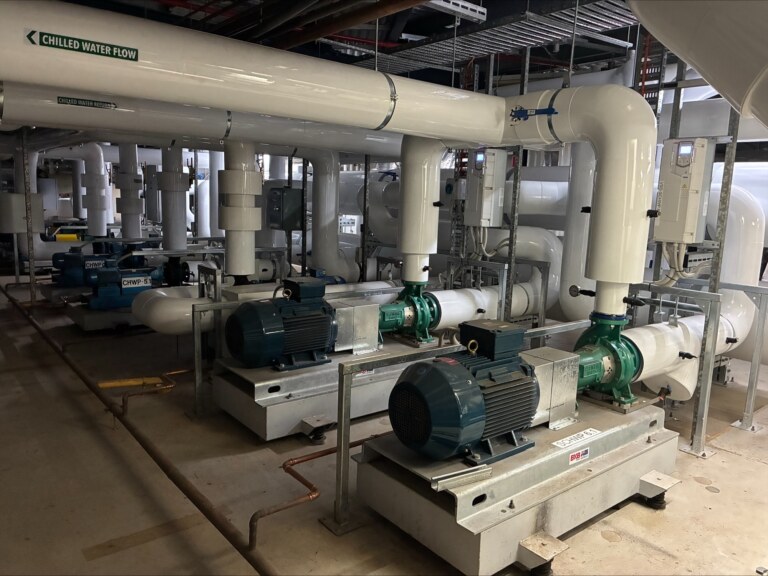
A.G. Coombs was engaged to deliver a chilled water infrastructure upgrade at Cabrini Hospital in Malvern, converting the existing system into a true primary and secondary configuration servicing critical clinical buildings. While the overall design intent was established by the consultant, A.G. Coombs played a central role in adapting the design to suit the physical constraints of the site and developing a constructable solution capable of being delivered without disruption to hospital operations.
The works were completed in a fully operational hospital environment, requiring the chilled water network to remain live throughout construction. A.G. Coombs applied its specialist expertise across engineering, drafting, prefabrication, installation and commissioning to integrate the new infrastructure while maintaining uninterrupted service to operating theatres, ICU and adjacent clinical spaces.
Challenges
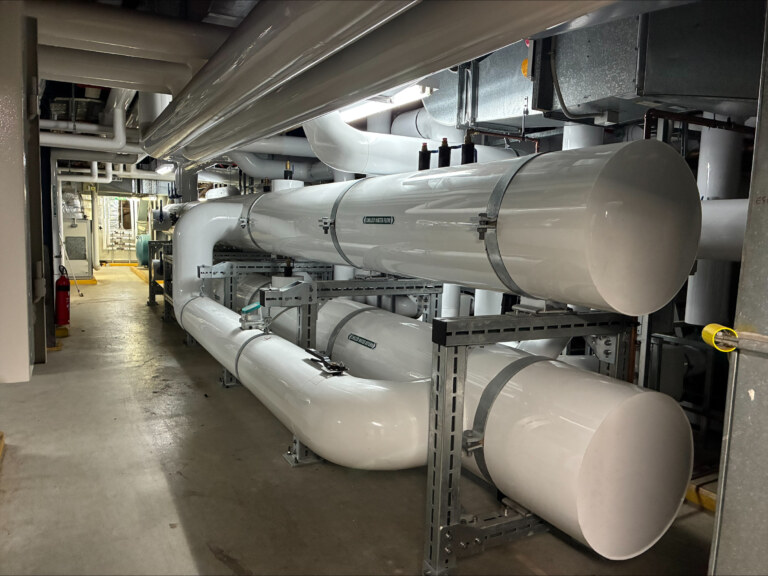
The project presented significant logistical and operational challenges due to its location within a live hospital and the constrained nature of the plant areas. Large mechanical equipment and pipework had to be transported through restricted access routes, including lifts with limited capacity and tight spatial tolerances. To manage these risks, project management, engineering and site teams undertook detailed site inspections to confirm access pathways, clearances and sequencing requirements before installation commenced.
Chilled water upgrades are typically undertaken during periods of reduced load; however, this project required delivery during higher demand conditions. Risk was mitigated through the installation of valved tee connections on the existing system, allowing new pipework to be connected in advance and enabling a staged transition to the new infrastructure. This approach minimised shutdown durations, reduced operational risk and allowed the existing system to remain available as a contingency during changeover.
Additional complexities included managing acoustic constraints within sensitive clinical environments, satisfying seismic requirements in an existing building not originally designed to current standards, coordinating multiple pipe freezes, and carefully planning noisy works to align with hospital operations. Close collaboration with specialist suppliers and subcontractors was essential to mitigate these risks while maintaining safety and program certainty.