
October 5, 2026 in News
Supporting Indigenous Business Through Purposeful Procu...
Throughout October, A.G. Coombs is recognising Indigenous Business Month and the important contribution Aboriginal and Torres Strait Islander business...
March 26, 2021
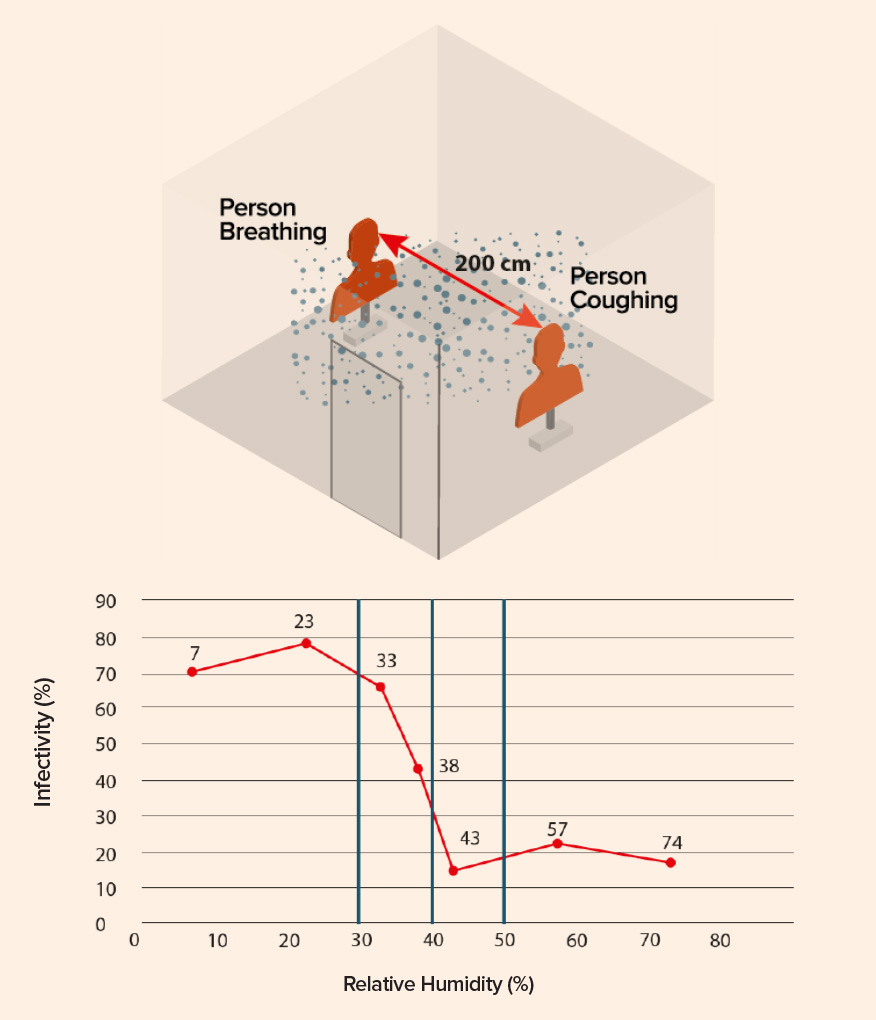
In the latest Autumn 2021 edition of IHEA Healthcare Facilities magazine, Rob Dagnall, Manager A.G. Coombs Advisory explores the airborne transmission of viruses and bacteria and how improving humidity control through HVAC systems can play a role to reduce infection spread.
Most building air conditioning systems are designed and controlled to provide temperature control for human comfort. HVAC systems for many buildings are not always designed to meet specific humidity targets. However, air conditioning systems are typically used effectively to precisely control humidity in specialist facilities spaces including laboratories and specialist healthcare, museums and art galleries and high technology and pharmaceutical manufacturing. Modifications to existing HVAC systems can be made to improve the ability to regulate the space humidity.

View the Full Article here.
Read the latest edition of Healthcare Facilities here.
For more information on COVID-19 and HVAC, visit the A.G. Coombs COVID-19 Building Services Resources page.


October 5, 2026 in News
Throughout October, A.G. Coombs is recognising Indigenous Business Month and the important contribution Aboriginal and Torres Strait Islander business...

October 1, 2026 in News
A.G. Coombs’ 80th anniversary has been marked with the release of Perpetuating the Vision: A.G. Coombs – Bringing Buildings to Life, a new online ...
September 21, 2026 in News
Pipe Thickness Testing, delivered by Walker Fire Protection, has been recognised as a nominee in the 2026 Property Council of Australia (PCA) Innovati...

September 18, 2026 in News
A.G. Coombs Group was proud to play a significant role in FM Connect 26, the Facility Management Association of Australia's (FMA) premier national con...