October 7, 2026 in News
Supporting Women in Trades and Building a More Diverse ...
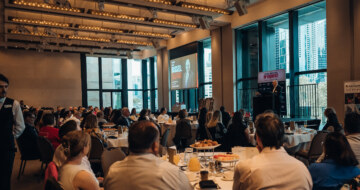
A.G. Coombs recently welcomed industry leaders, sponsors and alliance members to the Empowered Women in Trades (EWIT) VIP Sponsor and Alliance Member ...
July 21, 2017
A.G. Coombs recently hosted our fourth Canberra event series at the iconic National Museum of Australia. The organisers were thrilled to host 40 leaders in the building industry from in and around the Canberra region.
The event series to date has seen presentations by leading industry experts provide attendees with strategic insights into emerging trends and best practice in managing and maintaining building services.
Past topics have covered trends in optimising building performance, asset management systems & ‘big’ data, Building Information Management, through to an overview of recent changes to key fire protection system standards.
An overview of each of the four sessions is available below, with further information available on request.
Andrew Smith, Leader, Building Technologies, A.G. Coombs
Air conditioning systems typically consume around 50% of energy in buildings.
Most buildings are not working as well as they could. In many cases, poor building performance and systems are wasting energy and major plant and equipment design life is being compromised, wearing out sooner than they should. Tuning energy consuming systems to work correctly will significantly improve building performance, immediately returning energy and life cycle dividends.
There are now also an increasing number of attractive options that take a ‘cloud’ based ‘big data’ simulation approach to analyse, computer model, and externally drive HVAC systems to reduce their energy consumption. What is the best way to get HVAC energy down; tune the systems, drive them differently, or both?
This presentation explained how air conditioning systems use and waste energy, and how they can be tuned and driven differently to achieve energy savings along with performance enhancements and significant asset life-cycle improvements.
Warwick Stannus, Group Engineering Manager, A.G. Coombs Advisory
Building Information Technology and the move to digital construction technologies are transforming the way we are designing and constructing buildings though improving systems design, increasing productivity and safety, and reducing construction waste.
This presentation from one of Australia’s leading MEP BIM experts provided attendees with a framework to review their current approaches to project procurement, covering:
Carl Agar, Independent Commissioning Agent, A.G. Coombs Advisory
Cloud technologies are changing the course of asset and facility related data acquisition and management systems. The use of field mobility technology enabled by the cloud will not only revolutionise how we design, build and manage facilities, but also provide new innovative ways to analyse and optimise their life cycle performance and cost.
Whether your organisation embraces the cloud, or you are constrained to in-house systems, this presentation covered the opportunities, show how new technology is enabling this change, together with highlighting the importance of our whole of life asset information strategy in order to benefit all parts of the business, and especially your clients and the people that use your buildings.
Geoff Flower, Senior Engineer (Fire), A.G. Coombs Advisory
The 2016 edition of the National Construction Code Building Code of Australia has changed from a yearly revision cycle to a 3-yearly revision cycle. There has also been significant changes to the fire protection systems maintenance standard with a number of referenced Australian Standards relating to fire safety systems updated. Furthermore, Australian Standard AS 1851 for maintenance of fire protection systems has also recently been updated to include an emphasis on baseline data for assessing compliance of installed fire protection systems.
This presentation provided an overview of recent changes to key fire protection system standards, including the AS 1851 maintenance standard with particular attention to the issue of baseline data. It gave guidance on what constitutes baseline data, industry myths, and what practical measures may be taken to capture and document the baseline data for complaint fire protection systems in a building.


October 7, 2026 in News
A.G. Coombs recently welcomed industry leaders, sponsors and alliance members to the Empowered Women in Trades (EWIT) VIP Sponsor and Alliance Member ...

October 5, 2026 in News
Throughout October, A.G. Coombs is recognising Indigenous Business Month and the important contribution Aboriginal and Torres Strait Islander business...

October 1, 2026 in News
A.G. Coombs’ 80th anniversary has been marked with the release of Perpetuating the Vision: A.G. Coombs – Bringing Buildings to Life, a new online ...
September 21, 2026 in News
Pipe Thickness Testing, delivered by Walker Fire Protection, has been recognised as a nominee in the 2026 Property Council of Australia (PCA) Innovati...