
August 27, 2026 in Advisory Notes
Building Preparedness for Climate-Induced Air-Quality H...
External air quality degradation has emerged as a major operational concern for Australian buildings and the issue is expected to intensify as the cli...
September 6, 2017
Energy valves are new Internet of Things (IoT) devices to help reduce air conditioning energy usage by better controlling chilled water and heating hot water flows, reducing chiller, boiler, pumping and fan energy.
Energy Valves are web connected Chilled Water (CHW) and Heating Hot Water (HHW) control valves that include an electronic flow meter along with water temperature sensors to produce detailed system operational data. Advanced cloud-based analytics can be used to analyse this real-time information to monitor, control and manage cooling and heating coil performance.
Energy Valves typically have multiple control settings including flow, thermal power and delta-T management, all adjustable through an in-built web server. Delta-T refers to the temperature difference between the water inlet and the water outlet of a cooling or heating coil in an air-handling device.
These valves provide useful dynamic system flow and energy information, but their greatest benefit is in combating what is known as “low delta-T syndrome”.
“Low delta-T Syndrome” occurs when the temperature difference across a CHW or HHW coil is consistently lower than the desired value.
Low delta-T syndrome results in air-handling units demanding relatively high CHW or HHW flows for relatively longer periods of time, in order to maintain space temperature set-points. Consequently, pumps consume more energy in circulating water through the field, chillers may stage on more frequently and/or operate less efficiently with lower return water temperatures, and variable speed fans can operate at higher flows for longer. The overall result is poor system efficiency and excess energy consumption. In some systems, this can be as much as 8-10% of total HVAC system energy.
Typical causes of low delta-T syndrome include oversized coils or valves, fouled or degraded coils, poor system water balance or improperly controlled valves.
Utilising their embedded flow meter, supply and return water temperature sensors, as well as cloud based analytics capability, Energy Valves actively modulate water flow to maintain desired coil Delta-T, optimising the heat transfer from the coil conditioning the air.
The new Energy Valves analytics capability can leverage the captured system energy data. A static IP address can be assigned to a valve, giving building operators and maintainers the ability to remotely monitor valve and coil flow performance via a web interface. The IP address can also be assigned to a DDC network, enabling technicians to remotely check system parameters and make changes to flow rates. Tablet devices can be used to check valve readings while in the field.
In most cases, yes. It is recommended that an informed assessment be carried out first to ensure that installation is feasible and to quantify the extent of likely energy savings and improvements to indoor conditions for the particular building. A common practical installation hurdle is the requirement for a straight pipe section upstream of the valve, of at least five times the pipe diameter, to ensure the accuracy of measured data.


August 27, 2026 in Advisory Notes
External air quality degradation has emerged as a major operational concern for Australian buildings and the issue is expected to intensify as the cli...

July 20, 2026 in Advisory Notes
Building Management and Control Systems (BMCS) underpin the reliable and safe operation of commercial and institutional buildings. The technology cont...
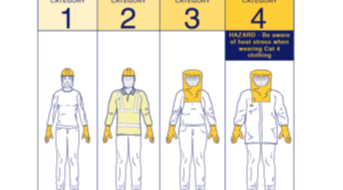
May 26, 2026 in Advisory Notes
Australian Standard AS/NZS 4836:2023 was developed in response to identified risks to workers from electric shock and arc flash. It provides guidance ...
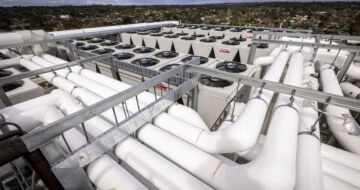
April 22, 2026 in Advisory Notes
As commercial buildings progress electrification programs, understanding how existing heating systems perform at lower operating temperatures has bec...