Navigating Heat Pump Retrofits — Low Temperature Heating Hot Water System Testing for Optimal Design

April 22, 2026

As commercial buildings progress electrification programs, understanding how existing heating systems perform at lower operating temperatures has become a critical step in retrofit planning. In response, low temperature heating hot water (HHW) testing is increasingly being used to complement traditional engineering assessments and building energy modelling.

 This practical, full scale testing approach allows facility managers and asset owners to evaluate how legacy heating systems respond when operated at conditions aligned with heat pump technology. When undertaken using a structured methodology, low temperature HHW testing provides valuable insight that can reduce electrification risk, inform system upgrade scope and support more efficient capital investment.

This Advisory Note outlines key considerations when planning and procuring low temperature HHW testing services, with the aim of ensuring that outcomes are representative, reliable and relevant to real world building operation.

Why Low Temperature Performance Matters

Most existing commercial buildings were designed to operate with high temperature heating hot water systems, typically around 80°C. These conditions align well with conventional gas fired boilers, which can deliver high water temperatures without significant performance penalties.

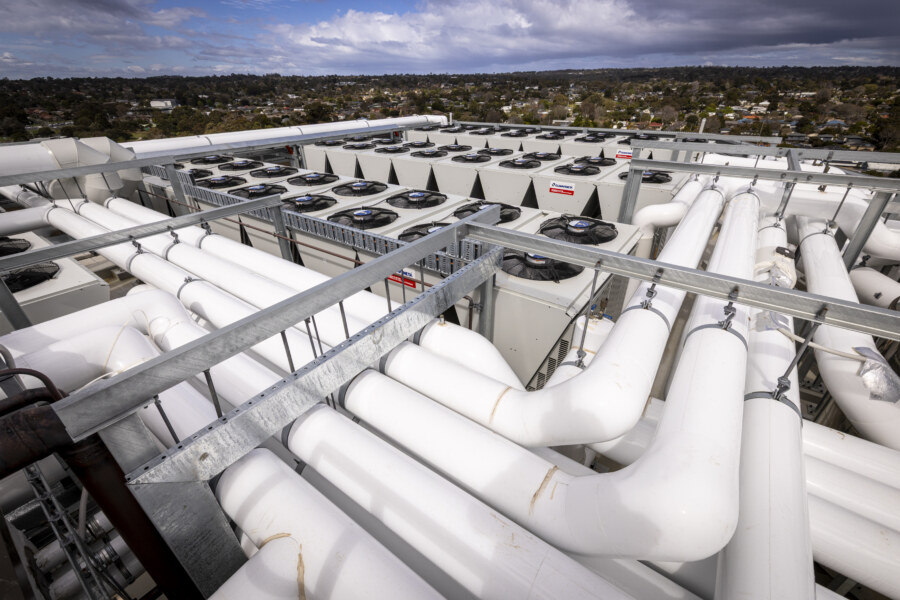
By contrast, air source heat pumps operate most efficiently at lower water temperatures, commonly in the range of 50–55°C. Attempting to maintain higher temperatures can significantly reduce heat pump efficiency, increase energy consumption and undermine expected operational benefits.

When connected to legacy heating systems designed for higher temperatures, reduced heat output can occur. Heating coils, radiators and air handling units may struggle to meet space heating demand during cold weather, particularly in zones that are already marginal under existing operation.

Low temperature HHW testing temporarily operates the existing system at reduced water temperatures during representative winter conditions. This enables facility teams to:

  • Identify areas where heating performance declines
  • Assess whether space comfort can be maintained under low temperature operation
  • Understand the scale and location of system constraints.

These findings provide a practical basis for determining whether targeted upgrades or system modifications are required to support future heat pump integration.

The Importance of Testing During Genuine Winter Conditions

There is only a limited seasonal window each year in which low temperature HHW testing can be conducted under genuine winter conditions. If the testing approach is flawed, valuable insights may be lost, delaying informed electrification decisions for an entire year.

For this reason, a disciplined and well planned testing methodology is essential.

Allowing for Multiple Test Attemps

In practice, the first low temperature test often does not produce usable results. Common issues include:

  • Ambient temperatures warmer than forecast
  • Unanticipated boiler temperature offsets or control limitations
  • Plant not operating as expected
  • Behavioural system responses that only emerge under sustained winter load.

It is therefore common for several test attempts to be required before valid low temperature conditions are achieved. As a guide, testing programs should allow for multiple test events, with the understanding that only a subset may provide data suitable for analysis.

Early engagement and realistic expectations are key to ensuring the testing program delivers useful outcomes within the available winter window.

Coordination Across Multiple Parties

Successful low temperature HHW testing relies on coordinated input from multiple contributors across disciplines and organisations. Where several service providers are involved, it is important that their roles, time commitments and associated costs are clearly identified and reflected in project scoping and budgets.

Depending on the site, contributors may include:

  • Mechanical Engineering Consultant: Develops the test methodology, defines data logging requirements, interprets results and prepares the final report with electrification recommendations.
  • Incumbent BMS Vendor Technician: Implements or approves required BMS changes, configures trend logs and ensures that all relevant system parameters are captured.
  • BMS Consultant: May undertake BMS configuration and monitoring where this is not performed by the incumbent vendor.
  • Incumbent Mechanical Services Contractor: May be required on site during testing to manually operate boilers, assess plant condition and monitor equipment behaviour, particularly where remote control is limited or non condensing boilers are installed.
  • Facility Manager: Confirms acceptable testing windows, manages tenant communications and ensures atypical occupancy patterns do not influence test results.
  • Project Lead: Coordinates activities across all parties and oversees testing execution. This role may be fulfilled by the mechanical engineer, facility manager or a nominated project representative.

The Value of Controls Knowledge

In many buildings, detailed operational knowledge sits with individuals who have supported the BMS or control strategy over an extended period. This includes understanding of warm up behaviour, plant staging logic, zone imbalances and historical operating issues.

Involving this controls expertise in the testing process can significantly improve interpretation of results. Their insight helps distinguish between limitations inherent to the physical system and those related to control settings or operational practices.

Limitations of Night Purging

Where ideal winter conditions are missed, night purging is sometimes considered as an alternative. This approach involves running air handling units on high outdoor air volumes overnight to lower internal temperatures prior to testing.

Experience has shown that night purging does not replicate genuine winter loads. Testing conducted under these conditions can overstate system capability, potentially leading to optimistic conclusions that are not borne out during actual cold weather operation.

Special Considerations of Non-Condensing Boilers

Buildings equipped with non-condensing boilers require particular care during low temperature HHW testing. These units are not designed for prolonged operation with low return water temperatures.

When return temperatures fall to approximately 55°C or below, flue gas condensation can occur within the boiler heat exchanger. Over time, this acidic condensate can lead to corrosion, reduced equipment life and increased maintenance requirements.

Low temperature testing can still be undertaken on systems with non condensing boilers, however procedures must be carefully managed to balance the value of operational insight against potential plant risk.

Using Test Outcomes to Inform Electrification Planning

When planned and executed effectively, low temperature HHW testing provides building specific insight that modelling alone cannot deliver. It allows facility managers and asset owners to make informed decisions about:

  • The feasibility of low temperature heat pump operation
  • The scope of required system upgrades
  • The most cost effective pathway toward building electrification.

By grounding electrification planning in real world performance data, testing helps reduce uncertainty and supports more confident investment decisions.

For broader guidance on heat pump retrofits within an electrification strategy, refer to the A.G. Coombs Advisory Note: Navigating Heat Pump Retrofits A Guide for Facility Managers.

 

For further guidance on how to navigate a heat pump retrofit project including low temperature HHW system testing, please contact:

Andrew Nagarajah
Sustainability Leader – Group Engineering
A.G. Coombs

+61 3 9248 2700
anagarajah@agcoombs.com.au


For more information

Contact Us

Loading ratings...

Latest Advisory Notes

December 1, 2025 in Advisory Notes

Combating High Humidity in Commercial Buildings

High humidity is one of the more challenging and persistent issues facing commercial buildings today. Longer humid spells, warmer temperatures and mor...