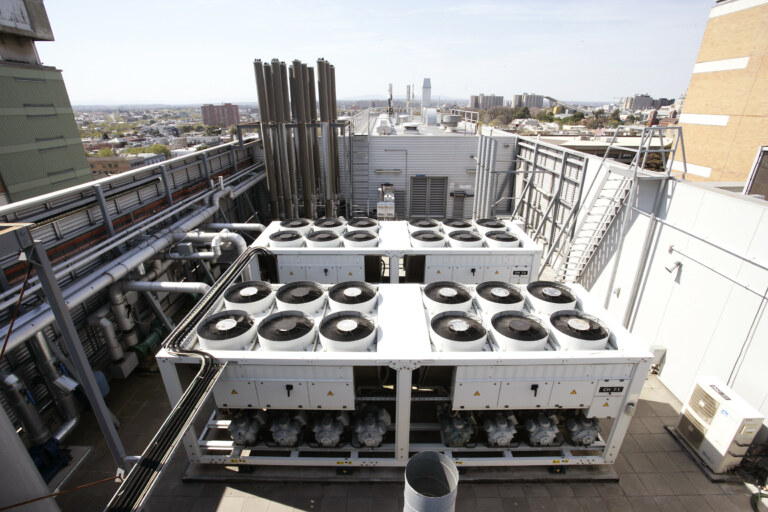
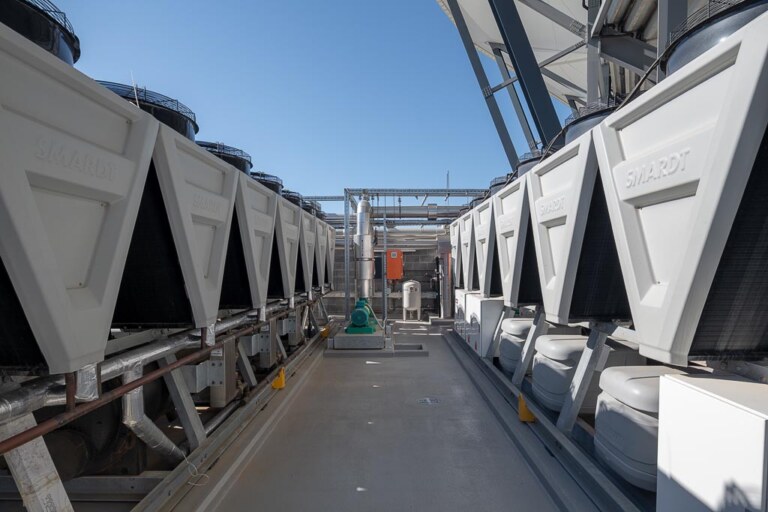
This Advisory Note covers the transition away from high‑GWP refrigerants, including HFC phase‑down impacts, emerging refrigerant technologies, heat pump adoption, PFAS considerations, and practical strategies for managing refrigerant-related operational, compliance and asset risks across commercial buildings.
HFC Phase Down
The HFC phase-down is well and truly in effect, with approximately a 50% reduction in HFC refrigerant import quotas compared to baseline levels, progressing towards an overall reduction target of 85% by 2036.
The reduced import quotas for HFC refrigerants such as R134a are causing operational impacts for building owners and operators. Prices have increased, availability is reducing, future replacement costs are becoming a concern, and refrigerant leakage is now being reported as part of Scope 1 emissions management.
Heat Pump Technology
Since our last Advisory Note published in 2022, building electrification and decarbonisation strategies have become mainstream across the Australian commercial building sector.
A large component of commercial building electrification relates to the replacement of gas-fired boilers with electric heat pump technology. These heat pumps rely on refrigerants to transfer heat and generate hot water for building heating systems.
Refrigerant selection is therefore no longer just a cooling discussion.
Most suppliers have trended towards lower-GWP heat pump refrigerants such as R32, R1234ze(E), R454B and R515B. Selection of these refrigerants is dependent on heat pump capacity, compressor type and, most importantly, the required hot water delivery temperature.
R290 (propane) has also become a popular refrigerant for heat pumps due to its extremely low GWP of 3 and its ability to deliver higher water temperatures compared to many synthetic refrigerants. The ability to deliver water temperatures of up to 70°C, with temperature differentials similar to conventional gas-fired boiler systems, has made R290 a viable solution for retrofit projects seeking to replace gas-fired heating plant.
Whilst R290 can be installed internally under AS/NZS 5149, commercial applications are typically located outdoors or on rooftops to simplify compliance with refrigerant charge limits, ventilation requirements and risk assessment obligations.
Refrigerant Market Trends
The broader HVAC market has continued to trend towards lower-GWP refrigerant alternatives, including hydrofluoroolefins (HFOs), HFC/HFO blends and natural refrigerants.
Adoption of these alternatives is influenced by equipment type, size, configuration and the location of HVAC plant and equipment. The table below highlights common HVAC equipment used within commercial buildings and the current refrigerant replacement trends being observed within the Australian market.