
July 20, 2026 in Advisory Notes
Are You in Control of Your BMCS?
Building Management and Control Systems (BMCS) underpin the reliable and safe operation of commercial and institutional buildings. The technology cont...
May 18, 2017
Does your building have 20% spare capacity in its tenant’s supplementary condenser water loop?
Many commercial buildings have Tenant’s Condenser Water systems to provide cooling water to supplementary air conditioning systems located in tenancies. Often the capacity of these systems is under pressure from increasing demands.
Many of the water cooled packaged air conditioning units installed in tenancies before 2008 use R22 refrigerant. R22 is being phased out in accordance with the Montreal Protocol because of its environmental impact. Ultimately all this equipment will reach the point at which it is not economical to repair and maintain. Given the usual life cycle of these units it is likely that most R22 plant will be replaced prior to 2020.
New water cooled package units installed after 2008 typically use refrigerant R410A. Although the newer technology units are more efficient than their R22 predecessors, they generally require additional condenser water flow capacity per kW of cooling compared to an equivalent R22 unit.
The following graph from a leading manufacturer indicates that a R410A unit requires an average tenant condenser water flow capacity increase of 20% compared to a R22 unit.

The R22 units require an average of 0.05l/s/kWr with the R410A units requiring an average of 0.06l/s/kWr.
This increase in tenant condenser water requirement can have significant implications when applied across an existing tenant’s condenser water system, particularly if the system is already at or near the limit of its capacity.
The following actions are recommended to pre-empt and prepare for this issue:
It should be noted that the overall maximum electrical power load may also increase when an equivalent capacity R410A unit is installed in the place of an R22 unit. Checks and allowances should be made for upgrading circuit breakers and potentially sub-mains depending on the nature, size and number of replacements.
download pdf


July 20, 2026 in Advisory Notes
Building Management and Control Systems (BMCS) underpin the reliable and safe operation of commercial and institutional buildings. The technology cont...
May 26, 2026 in Advisory Notes
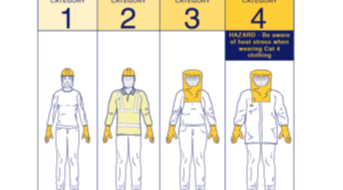
Australian Standard AS/NZS 4836:2023 was developed in response to identified risks to workers from electric shock and arc flash. It provides guidance ...
April 22, 2026 in Advisory Notes
As commercial buildings progress electrification programs, understanding how existing heating systems perform at lower operating temperatures has bec...
March 4, 2026 in Advisory Notes
False fire alarms are frustrating, expensive and a waste of resources. They also increase facility management risk by encouraging occupant complacency...