
October 9, 2026 in News
Championing Culture and Connection Through Cardinia Dea...
More than 350 Koorie students from 27 primary and secondary schools gathered at Deep Creek Reserve for the 2026 Cardinia Deadly Day, a celebration of ...
March 11, 2026

Since 13 February 2026, all essential fire safety measures listed on a building’s Fire Safety Schedule must be inspected, tested and maintained in accordance with AS 1851‑2012, with compliance evidenced through the Annual Fire Safety Statement (AFSS) and endorsed by an accredited practitioner (fire safety). Records must be retained on site for a minimum of seven years, available for regulatory review at any time.
The NSW Government’s Fire Safety Industry Reference Guide reinforces these obligations, highlighting the need for clearer governance, more rigorous record keeping and accurate evidence trails to support annual certification. As councils and Fire and Rescue NSW maintain strong enforcement powers, owners should expect a more structured compliance environment.
AS 1851 sets the benchmark for routine servicing of fire protection systems, outlining servicing frequencies, tolerances and documentation requirements. Monthly, six‑monthly and yearly maintenance and inspection activities must occur within prescribed timeframes, with any “out‑of‑tolerance” work recorded as a non‑conformance in the system logbook.
The standard also requires complete logbooks, supporting documentation, and signed hard‑copy records left on site after each service, along with a Yearly Condition Report summarising the performance status of all fire safety measures monitored throughout the year. These records provide the backbone of AFSS verification and help reduce exposure to regulatory or insurance challenges.
AS 1851 also sets firm expectations for defect reporting. Technicians must escalate critical defects before leaving site and submit written confirmation within 24 hours, while non‑critical defects and non‑conformances must be reported within one week.
Baseline data provides the performance reference against which routine servicing and annual testing can be validated. It typically includes approved design drawings, commissioning results, interface diagrams, block plans and cause‑and‑effect matrices that demonstrate how systems were designed to operate. The absence of baseline records does not remove the owner’s obligations; instead, missing data should be progressively reconstructed to support routine service and AFSS evidence, particularly for systems with multiple interfaces.
The NSW Government guide clarifies that AS 1851 baseline data requirements mainly involve pressure and flow benchmarks for sprinkler, hydrant and pumpset systems, while broader documentation improves reliability and supports AFSS preparation within NSW’s regulatory framework. For many buildings, this may require specialist engineering support to re‑establish or verify missing data.
A.G. Coombs Advisory sees several recurring issues across NSW: late AFSS submissions due to missing data, contractors unable to complete mandatory Full Function Fire Tests without accurate reference material, maintenance carried out by technicians without the appropriate qualifications, increased council scrutiny where annual statements are delayed, and higher emergency repair costs when documentation is unavailable.
To support owners, A.G. Coombs Advisory provides baseline data reviews, reconstruction where required, coordinated AS 1851 test planning, Full Function Fire Test support and assistance with AFSS documentation and lodgement.
Building owners and facility managers seeking clarity on their obligations under the NSW reforms and AS 1851, or requiring assistance with baseline data and annual testing preparation, can contact Kieran Maple, Leader – Fire (NSW/ACT) at A.G. Coombs Advisory for guidance tailored to their building’s needs.


October 9, 2026 in News
More than 350 Koorie students from 27 primary and secondary schools gathered at Deep Creek Reserve for the 2026 Cardinia Deadly Day, a celebration of ...
October 8, 2026 in News
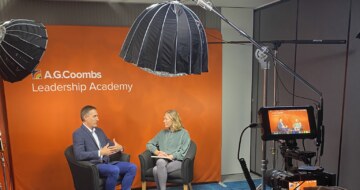
In an industry where technical expertise often takes precedence, A.G. Coombs has placed human development at the heart of its business strategy. The L...

October 7, 2026 in News
A.G. Coombs recently welcomed industry leaders, sponsors and alliance members to the Empowered Women in Trades (EWIT) VIP Sponsor and Alliance Member ...

October 5, 2026 in News
Throughout October, A.G. Coombs is recognising Indigenous Business Month and the important contribution Aboriginal and Torres Strait Islander business...