August 20, 2026 in News
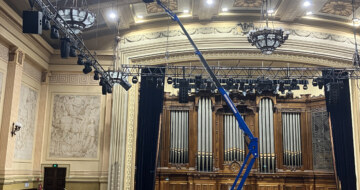
Heritage Meets High Standards — Melbourne Townhall
When Walker Fire Protection was tasked with upgrading the fire sprinkler system at Melbourne’s heritage-listed Town Hall, the project presented ...
September 20, 2017
This morning we would like to talk briefly about the revolution that digitisation is bringing to the built environment.
As Presented at the TEMC Melbourne, 20 September 2017 by Bryon Price, Strategic Development Director, A.G. Coombs Group.
Buildings and their construction and operation are possibly the last ‘great’ area of human activity to digitise. Aerospace, the auto industry, healthcare and indeed education are all there.
This presentation will talk briefly to three aspects:
In buildings digitisation really got a move on around 9 or 10 years ago, with the development of Building Information Modelling software. BIM. These digital models have given us big improvements in design and construction and now the shift to modular off site construction.
In the existing facilities space, it is a newer phenomenon, we can now ‘digitally’ soak up all the important information associated with an existing building and their systems.
With the recent software developments, we can draw live information 24/7 from the building, either from its automation systems, its energy metering systems or from a range of IoT monitoring devices.
What is certain, like everything that is digitised; the future will not be short of information!
We can think of this as an information cycle. The building produces information based on its current condition and operation, this is an input, along with other sources such as weather data, energy cost data, future operational requirements, and in the case of new buildings, the BIM.
This information can be analysed. The live feeds can be processed using ‘analytics’ or rules based ‘big data’ techniques to find issues and opportunities for improvement. And when the asset information and live data is put together we can target maintenance and upgrade effort for the best outcomes.
Knowledge bases of previous experience can be added to the mix, and even machine learning techniques are now being used.
This digital information can help us to:
Changes to the facility and the fact that the facility is always changing produces new information and it goes around the information cycle again.
It is in effect a ‘digital information enhanced continuous improvement process’ – PLAN – DO – ACT – REVIEW that can be applied to buildings and of course campuses and portfolios.
From all of this can come:
Rolled up all; better buildings and reduced operational costs, improved sustainability and reduced total facility costs are all possible based on better information.
Of course, the challenge is the ‘digitisation’.


August 20, 2026 in News
When Walker Fire Protection was tasked with upgrading the fire sprinkler system at Melbourne’s heritage-listed Town Hall, the project presented ...
August 19, 2026 in News
A.G. Coombs Group was proud to play a significant role in FM Connect 26, the Facility Management Association of Australia's (FMA) premier national con...
August 11, 2026 in News
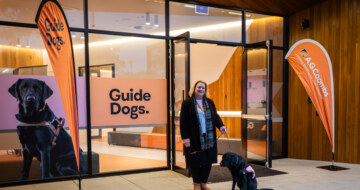
A.G. Coombs is proud to announce our partnership with Guide Dogs Victoria, further strengthening our commitment to inclusion, accessibility and positi...
August 6, 2026 in News
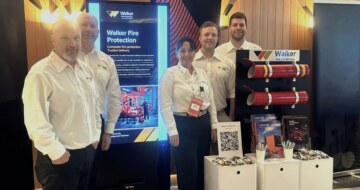
A.G. Coombs Group was proud to play a significant role in FM Connect 26, the Facility Management Association of Australia's (FMA) premier national con...