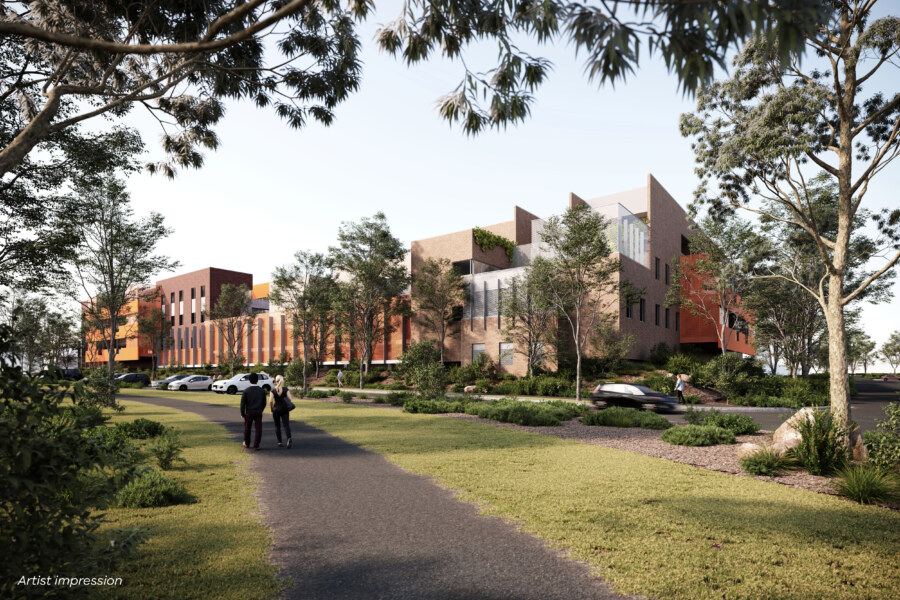
Located in the Melbourne suburb of Fairfield, and surrounded by green vistas, the Thomas Embling Hospital (which is part of the Victorian Institute of Forensic Mental Health — known as Forensicare) provides treatment and care for people living with a serious mental illness who are in, or at risk of, entering the justice system.
The Thomas Embling Hospital redevelopment project delivers on a number of key recommendations from the 2021 Royal Commission into Victoria’s Mental Health System, including the provision of co-design at the heart of all new mental health infrastructure. This co-design process incorporates the knowledge of Victorians with lived experience of mental health concerns, carers, families and clinicians to help shape the planning and design.
Designed for today and tomorrow
As the largest ever investment in the Thomas Embling Hospital, the 136-bed facility is undergoing expansion and refurbishment which includes the delivery of an additional 82 beds — a dedicated 34-bed women’s precinct and a 48-bed medium-security men’s facility. The project will also deliver a new entry complex, carparking and administration facilities.
The project is funded by the Victorian Government and construction is being overseen by the Victorian Health Building Authority (VHBA), in collaboration with operator Forensicare. As the construction contractor, John Holland looked to A.G. Coombs for mechanical services expertise.
By embracing an Early Contractor Involvement (ECI) model, the A.G. Coombs team had an all-important early engagement to shape and influence services design whilst working to a transparent mechanical services budget.
“John Holland deployed this ECI arrangement with A.G. Coombs to great success on the Victorian Heart Hospital project, so replicating this approach at Thomas Embling was a natural fit,” says Michael Roberts, Project Manager at A.G. Coombs.
“Given the particular complexity of this project — combining healthcare with a secure facility — the ECI approach allowed us to immerse ourselves in the project with the broader design and construct team from day one. It also enabled A.G. Coombs to start planning out our prefabrication designs and scheduling.”
A staged approach
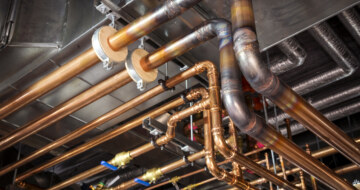
According to A.G. Coombs Lead Engineer Joshua Pirzas, Stage 1 includes air conditioning and ventilation systems, dedicated exhaust systems and computer room air conditioning.
“For stage 2 the focus has been on the central plant, incorporating large heat pumps to produce chilled and heating water for air conditioning systems.” From early engagement, all stakeholders recognised the important role of temperature control to help influence positive behaviour and support appropriate sleep patterns.
Maintaining a constant, comfortable temperature using the mechanical plant is a key enabler to reducing frustration and irritability that could be linked to fluctuating temperatures, whilst also creating a more sleep-conducive environment, which in turn promotes good sleep outcomes.
As a mental health facility, the design team also had to consider anti-ligature guidelines and ensure that building services elements such as ceiling grills and control panels did not contribute to the risk of self-harm.